I desperately want to go to Russia!
Which is why I'm a bit disappointed with my university, where I only get the possibility to go to Russia for three months. I will also have to study with Norwegians only in Russia (at a Norwegian center), with teachers that speak Norwegian but that apparently teach in Russian. How is it fair that the students studying English get to go to English-speaking countries for a year, whereas those who study Russian, which is so much more difficult, only get three months? And why don't we get any practice actually using the language?
Studying Russian in the incredibly grammatical and sterile manner they do here is not a problem for me, since I writes essays on my own accord, have a big vocabulary and can read books, and meet with a Russian speaking person once a week. But if I had had no previous knowledge of Russian, and I only started studying this way, I very much doubt if I would've found it very rewarding. We never write anything of our own, we have never handed in anything written whatsoever, and we only get to speak once a week - that is those who actually show up for those hours. Since they are not obligatory, a lot of people just drop them. Not that the lecturers are obligatory, people still go to them without actually being forced, but for some reason the speaking class seems to be of very little interest to a lot of students. They are the only hours that include some literature!
This really makes me wonder how much Russian stuff the other students do on their own. I really can't imagine that someone who only follows these classes and who doesn't try to improve on his or her own would be able to follow classes in Russian after only one year. Since people still seem to do it, does that mean that the classes that we get in Russia aren't difficult at all? :(
Today as I was browsing through the classes that are offered at Oslo University I got very much tempted by some French classes. However, everything at Oslo University must be difficult and complicated, and I can't choose any free subjects. And if I could, I don't think I would be able to choose those French classes, because they seem to be reserved for people enrolled in French bachelor programs or masters programs. And, certain classes seem to be held once every 4th year... FLEXIBILITY, Norway. It's a virtue.
I'll get to it eventually though. As soon as I am eligible for student funding in this country I'm going to use it to the max, even though staying at this particular university for a decade doesn't feel that very tempting. Meanwhile I want to find some sort of distance class that forces me to go to Stockholm every now and then, just for a change of scenery, but I can't do that either since I'm going to Russia this fall. Bah!
For this summer, I signed up for a distance class on female history and another one in English grammar and translation. (At Swedish universities - distance teaching isn't really a concept in Norway it seems.) I may go crazy and go through with both.
Thursday, March 11, 2010

Monday, March 8, 2010
Whose day?
It seems like everyone is posting about the international Women's Day, so I can't help myself, I have to post as well! But if you want to read something much more interesting, I recommend you go read this 8th of March post.
My favorite Hanne Nabintu Herland is once again in the newspapers, thanks to this occasion. Heading of the article: Today we should turn the TV off and give him a sexual surprise. This time she thinks that Women's Day should be turned into Man Day, and she says that if the journalist called her because she's a woman, then she feels like just hanging up. She wants to be interviewed because she has something interesting to say.
I think we can all agree that the reason the newspaper called her is because she always says things that make a lot of people angry - and a lot of men happy.
(Did you see what I just did there? I separated "men" from "people", something that is usually done when speaking of women! And I even did it unconsciously! Perhaps this is the problem Herland speaks of?)
I never really understand what that woman wants to say when she appears somewhere, so I'll just leave it at that.
International women's Day is kind of like Valentine's Day in this part of the world. It's kind of shameful to celebrate it. It's best for all if you aren't even aware of what day it is. Surely, going "oh? Valentine's Day is today?" is a sign of you being a sensible person and not tricked by the evil forces of capitalism and consumption. Surely, these kinds of days are just about making people spend money (but hello, Christmas?), and on (primarily) women on top of that. Women in Scandinavia get no flowers or anything like that on the eighth of March, and I think many would consider it just a little bit politically incorrect to give them any. Equality and all that; women don't need any flowers because they already have it all. Only in countries where women are not yet as emancipated as in Scandinavia is it okay to give them gifts and to celebrate them.
The only people I've met today who have mentioned this day were... Russian. And I can't help thinking that it's a nice thing. I wouldn't mind at all if International Women's Day was celebrated at least... a bit around here, and if it was not just a reason for the newspapers to write articles about equality or the illusion of equality, which are then attacked by men crying about how feminism has gone too far and about how women should go back to being women.
And speaking about women being women... what does that mean? Does it mean being servile, shy and knowing your place?
Or does it mean trying to look nice, to be feminine? (Because that is kind of looked down on, even by men, as non-intellectual and vain. So are we supposed to do that or not?)
I feel like celebrating today by painting my fingernails pink and doing a facial mask, and by reading a couple more pages of Charlotte Roche's scandalous autobiographical novel about revolting things women definitely shouldn't be writing about, but sadly I don't really have the time for that. I have to be utterly unfeminine and write an essay on the nationstate from an historical perspective, and read some poorly written essays other students have written. Come to think of it though, all of those students are women, so perhaps it isn't unfeminine at all? Did academia turn feminine?
My favorite Hanne Nabintu Herland is once again in the newspapers, thanks to this occasion. Heading of the article: Today we should turn the TV off and give him a sexual surprise. This time she thinks that Women's Day should be turned into Man Day, and she says that if the journalist called her because she's a woman, then she feels like just hanging up. She wants to be interviewed because she has something interesting to say.
I think we can all agree that the reason the newspaper called her is because she always says things that make a lot of people angry - and a lot of men happy.
(Did you see what I just did there? I separated "men" from "people", something that is usually done when speaking of women! And I even did it unconsciously! Perhaps this is the problem Herland speaks of?)
I never really understand what that woman wants to say when she appears somewhere, so I'll just leave it at that.
International women's Day is kind of like Valentine's Day in this part of the world. It's kind of shameful to celebrate it. It's best for all if you aren't even aware of what day it is. Surely, going "oh? Valentine's Day is today?" is a sign of you being a sensible person and not tricked by the evil forces of capitalism and consumption. Surely, these kinds of days are just about making people spend money (but hello, Christmas?), and on (primarily) women on top of that. Women in Scandinavia get no flowers or anything like that on the eighth of March, and I think many would consider it just a little bit politically incorrect to give them any. Equality and all that; women don't need any flowers because they already have it all. Only in countries where women are not yet as emancipated as in Scandinavia is it okay to give them gifts and to celebrate them.
The only people I've met today who have mentioned this day were... Russian. And I can't help thinking that it's a nice thing. I wouldn't mind at all if International Women's Day was celebrated at least... a bit around here, and if it was not just a reason for the newspapers to write articles about equality or the illusion of equality, which are then attacked by men crying about how feminism has gone too far and about how women should go back to being women.
And speaking about women being women... what does that mean? Does it mean being servile, shy and knowing your place?
Or does it mean trying to look nice, to be feminine? (Because that is kind of looked down on, even by men, as non-intellectual and vain. So are we supposed to do that or not?)
I feel like celebrating today by painting my fingernails pink and doing a facial mask, and by reading a couple more pages of Charlotte Roche's scandalous autobiographical novel about revolting things women definitely shouldn't be writing about, but sadly I don't really have the time for that. I have to be utterly unfeminine and write an essay on the nationstate from an historical perspective, and read some poorly written essays other students have written. Come to think of it though, all of those students are women, so perhaps it isn't unfeminine at all? Did academia turn feminine?
Saturday, March 6, 2010
Feeding the Russophilia


Great news! Søstrene Grene opened a store in Oslo, on Karl Johan. Great store, great stuff, great prices! I just couldn't help buying these two.
On another note, has anyone read Наталия Толстая? I've been reading her collection of short stories entitled Одна forever, and even though I have been enjoying it rather much, I must admit that I'm getting a bit tired of it. Each and every one of the short stories has an air of gloom about it, and the (as I perceive it) somewhat condescending tone of the narrator is ever present. All of her main characters seem to have lost all interest in life and the narrator makes an art out of describing how pointless their existence is (and how lonely). Funnily enough, the author seems to have a certain connection to Sweden, because several of the stories are about Swedish or Sweden; how naïve them Swedes are with their idyllic image of Russia, that mysterious Russia that of course no one can understand (and this seems to be something that only goes for Russia) - certainly no foreigners. And of course, about what health freaks the Swedes are and how unfeminine the women are. There's also a general resentment against men, even though the narrator seems to pity them more than anything else.
Still, it's very good reading, and much more difficult than Dostoyevsky or any of the classics. I just kind of look forward to finishing it...
Tuesday, February 23, 2010
Very much yes.

Today I finally got the books I ordered some time ago. Isn't this beautiful? I'm especially impressed by the fact that the Russian book only cost like eight euros. Just for the fun of it, I'm not going to wait until I reach some sort of level in German until I start reading :-)
Saturday, February 20, 2010
Il faut voir les choses autrement.
Comme d'habitude, je suis très occupée par mes études, mais ce n'est rien de nouveau ça, c'est toujours pareil. J'aime bien être occupée et ce n'est donc pas un problème, mais le manque de temps pour mes langues « mineures » m'angoisse. Je déteste la question « depuis combien de temps étudies-tu le hongrois (ou le russe, l'allemand) ? » Comment est-on censé répondre à ça quand on ne peut s'occuper de la langue en question que des temps en temps ? Les gens s'attendent quand même à des résultats quand tu dis "ben... genre depuis deux ans...".
Autour de Noël, je pensais que c'était une très bonne idée de commencer à étudier l'allemand aussi, ce qui n'aide pas avec le hongrois. C'est forcément le hongrois qui va en souffrir. Je prends le temps qui aurait autrement été dédié au hongrois, et je l'utilise pour le nouveau venu. Je ne vais pas piquer le temps du russe, parce que le russe c'est très sérieux maintenant, et si je ne fais pas gaffe, j'aurai une mauvaise note à l'université. Mais j'aime bien l'allemand, je veux bien l'apprendre jusqu'au bout. Niveau compréhension c'est très facile, et je pense que c'est une langue qui pourrait me servir pour mes études. Maintenant que j'étudie une langue à l'université, je n'ai vraiment pas envie d'étudier mes autres langues de la même manière. Je n'ai jamais été très fan de la méthode « apprends le livre de grammaire par coeur ! », et maintenant que je n'ai plus le choix parce que c'est comme ça que l'on est censé apprendre le russe à l'université, je veux vraiment apprendre l'allemand d'une autre manière. En lisant, en écrivant, bref de la manière que j'ai appris le russe par moi-même, et ce qui m'a toujours beaucoup plu . Dans quelques jours, ou peut-être même demain, j'aurai trois nouveaux livres allemands et j'ai l'intention de commencer à les lire le plus vite possible. D'habitude, les autres études (les études facultatives) semblent toujours plus intéressantes quand on est occupé à faire quelque chose d'autre (non-facultatif). Alors, je dois bien profiter de mon manque de temps maintenant!
Autour de Noël, je pensais que c'était une très bonne idée de commencer à étudier l'allemand aussi, ce qui n'aide pas avec le hongrois. C'est forcément le hongrois qui va en souffrir. Je prends le temps qui aurait autrement été dédié au hongrois, et je l'utilise pour le nouveau venu. Je ne vais pas piquer le temps du russe, parce que le russe c'est très sérieux maintenant, et si je ne fais pas gaffe, j'aurai une mauvaise note à l'université. Mais j'aime bien l'allemand, je veux bien l'apprendre jusqu'au bout. Niveau compréhension c'est très facile, et je pense que c'est une langue qui pourrait me servir pour mes études. Maintenant que j'étudie une langue à l'université, je n'ai vraiment pas envie d'étudier mes autres langues de la même manière. Je n'ai jamais été très fan de la méthode « apprends le livre de grammaire par coeur ! », et maintenant que je n'ai plus le choix parce que c'est comme ça que l'on est censé apprendre le russe à l'université, je veux vraiment apprendre l'allemand d'une autre manière. En lisant, en écrivant, bref de la manière que j'ai appris le russe par moi-même, et ce qui m'a toujours beaucoup plu . Dans quelques jours, ou peut-être même demain, j'aurai trois nouveaux livres allemands et j'ai l'intention de commencer à les lire le plus vite possible. D'habitude, les autres études (les études facultatives) semblent toujours plus intéressantes quand on est occupé à faire quelque chose d'autre (non-facultatif). Alors, je dois bien profiter de mon manque de temps maintenant!
Thursday, February 11, 2010
What's with the trumpets?
For some reason, I have thing for trumpets. I wasn't really aware of it, until I started noticing that a lot of the songs that I can't stop listening to include trumpets.
Here are my three favorites :-) (Swedish, Russian and Russian)
Do you know of any other good songs with trumpets?
Here are my three favorites :-) (Swedish, Russian and Russian)
Do you know of any other good songs with trumpets?
Monday, January 11, 2010
Hungary seems to have a lot to offer.
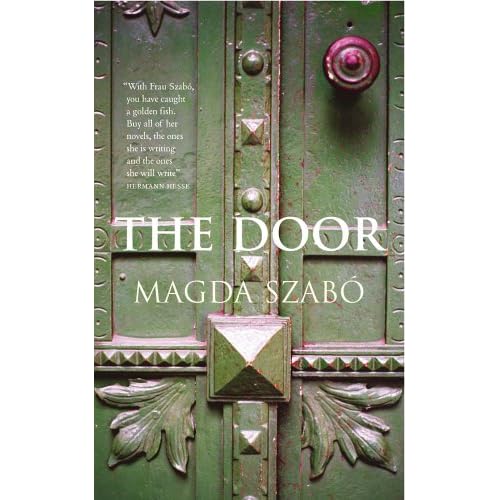
Some time ago, my boyfriend received a rather interesting and beneficial offer to join a book club. Upon joining, you could choose a number of books, and one of the books I chose was "The Door" by Magda Szabó. First of all, it cost almost nothing (so I could choose more books), and secondly, it was written by a Hungarian author. Now I am very happy I chose that book, and that I actually got around to reading it since I usually just put the books I buy in my little library, and then they sit there for years and years. Magda Szabó is probably one of my new favorite authors, and I really look forward to reading more of her books, and to finally perhaps read one of them in Hungarian.
This book is really not particularly long, but it's written in a very dense manner, and it took me much more time to read than I had expected. I read the book in Norwegian, but I still had trouble following sometimes. Szabó's sentences are not like most authors' sentences, something that made reading this book a different reading experience. In the beginning, I was a bit annoyed sometimes, but then I think I just got used to it and started to appreciate her intricate manner of writing instead.
The story is rather special. I never read the text on the cover before reading a book, so I had no idea what this one was about. In short, it's the story of a female author who hires a housekeeper to keep track of her house so that she can focus on writing. The housekeeper, Emerenc, is also the care keeper of the neighborhood, and thanks to her, everything is in order. She's an old woman who never sleeps, but only works and works and works and who never lets anyone into her apartment. She does not accept praise or gifts, she chooses her own pay and doesn't work for just anyone. She decides her own working hours, and may come in the middle of the night to do her tidying. Soon the housekeeper is the one who is in charge of the house and the relationship between her and the narrator turns into something rather complicated. It's a very fascinating story. I can't help but appreciate the simple stories that are somehow made awesome by the author. This is not a flamboyant love drama or a detective story that can draw anyone in, there are no heroes or anything of that kind, just pure good writing. You never even find out the name or the appearance of the main character, the author and narrator, not even her age, and you really don't need to...
Subscribe to:
Posts (Atom)